Overview
PREFIRE is making the first full spectral measurements of Earth’s Far InfraRed (FIR) radiation, revealing the full spectrum of Arctic and Antarctic radiant energy. It fills a significant gap in our knowledge of the Arctic and Antarctic energy budgets and the role of FIR radiation in polar land, ice, and ocean changes.
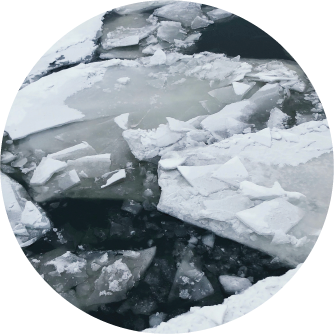
The Arctic is Earth’s thermostat. The tropics receive more energy from the sun than the polar regions, atmospheric motions transport that extra amount poleward, and the excess energy is vented into space by the polar regions.
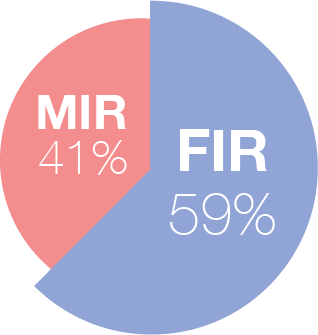
Nearly 60% of Arctic emission occurs at wavelengths longer than 15 µm (FIR) which have never been systematically measured.

PREFIRE quantifies spatial and temporal variability in spectral FIR emission and the amount of outgoing infrared energy that remains within the atmosphere.
Mission

PREFIRE addresses the knowledge gap in Earth’s energy balance with two spectroradiometers (TIRS-PREFIRE) that are capable of measuring FIR wavelengths. These instruments are carried by two 6U CubeSat spacecraft, which were launched into different 531 km altitude, near-polar sun-synchronous (98° inclination) orbits in late spring 2024 (May 25 and June 5). Each satellite has a heritage miniaturized IR spectrometer, covering the 5-53 μm wavelength region at approximately 0.86 μm spectral sampling. PREFIRE-SAT1 crosses the equator going toward the north at about 03:35 local time, and crosses the equator going southward at about 15:35 local time (PREFIRE-SAT2 does these at about 08:00 and 20:00 local time respectively). Radiance measurements are collected across the globe, although other science products derived from those are currently produced only for the polar regions (poleward of 60° latitude).
PREFIRE Measures Complete Emission Spectra
Scientists use atmospheric and surface emission data to understand the balance of Earth’s incoming and outgoing radiation. Information about these components of Earth’s energy budget is essential for predicting long-term and seasonal changes, as well as understanding the mechanisms that control them.

Conventional infrared (IR) sensors measure the mid-infrared (MIR) wavelengths up to about 15µm, while TIRS-PREFIRE measures wavelengths in the MIR and the far-infrared (FIR), allowing scientists to more accurately calculate Earth’s energy budget.

The measurement of complete atmospheric and surface emission spectra also captures more information about the influences of different surfaces, atmospheric processes, and clouds. These observations help isolate the influences of these components so that scientists can better identify and understand the mechanisms that drive long-term and seasonal polar land, ice, and ocean changes that matter to the country and world.


The figure on the left shows the brightness temperature for ice, mixed, and liquid clouds, while the figure above shows the emissivity of different surface types. In the FIR wavelengths, each cloud type looks quite different, as do the various surface types. This indicates that there is a great deal of information in the FIR that traditional MIR sensors cannot measure.
Scientists analyze the emission spectra to retrieve atmospheric and surface variables, like temperature and moisture content, and integrate this information into local and global prediction models to understand and predict atmospheric phenomena and their impact on surface processes.

Having Twin PREFIRE CubeSats Enables More Science

Two spacecraft in near-polar orbits view Arctic and Antarctic surfaces and clouds, providing multiple observations of those regions each day. The satellites frequently cross over their own path and that of the other satellite, providing scientists with multiple measurements of the same place over short time periods. Scientists can use the differences between these measurements to study short-term phenomena, like rapid ice-melt events.